
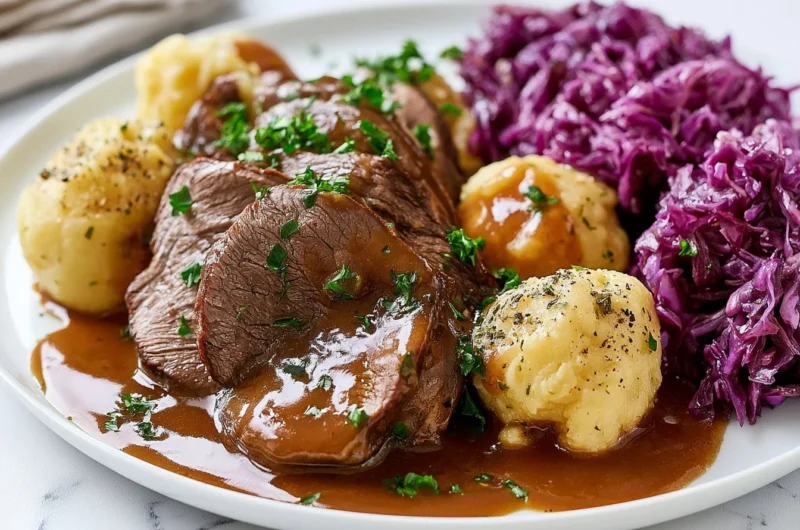
Traditional Sauerbraten Recipe You Can’t Resist
The aroma of marinated beef simmering in a rich, tangy sauce wafts through the air, filling the kitchen with warmth and nostalgia. I still remember my mother preparing Sauerbraten every Sunday afternoon, her laughter blending with the sound of sizzling oil as she added onions and spices. The anticipation of this tender, mouthwatering dish made each weekend feel special. You may also find Cook Up An Authentic German Sauerbraten Recipe At Home useful.
Sauerbraten is a celebrated German pot roast that allows the flavors of simple ingredients to shine through, creating a dish that’s both hearty and elegant. This guide will walk you through creating your own traditional Sauerbraten, so you can bring a piece of that memory into your home. You may also find Deliciously Traditional German Streuselkuchen Crumb Cake Recipe useful.
Why You’ll Love This Traditional Sauerbraten Recipe
- Tender, Flavor-Infused Meat: The marinating process ensures that the beef absorbs all the flavors, resulting in melt-in-your-mouth texture.
- One-Pot Wonder: Less cleanup is necessary, as this dish comes together in a single pot.
- Make-Ahead Feasibility: Sauerbraten tastes even better the next day, making it an ideal dish for meal prep.
- Classic Comfort Food: The combination of sweet and sour sauce paired with savory beef brings a hearty feeling, perfect for family meals.
- Versatile Serving Options: Serve it alongside noodles, potatoes, or bread to soak up that delicious gravy.
Ingredients You’ll Need
- 3-4 lbs beef roast (an eye of round works best for tenderness)
- 2 cups red wine vinegar (adds that essential tang)
- 1 cup beef broth (for added richness)
- 1 onion, quartered (provides a comforting flavor)
- 2 carrots, chopped (adds sweetness to balance the tang)
- 4 cloves garlic, smashed (infuses flavor during marination)
- 10-12 juniper berries (gives a distinct flavor—don’t skip this)
- 2 tablespoons sugar (helps mellow the acidity)
- 4 tablespoons vegetable oil (for browning the meat)
- Salt and pepper to taste
How to Make Traditional Sauerbraten (Step-by-Step)
-
Marinate the Beef: In a large bowl, combine red wine vinegar, beef broth, onion, carrots, garlic, juniper berries, and sugar. Place the beef in the marinade, ensuring it’s fully submerged. Cover and refrigerate for 3-5 days, turning the meat daily. You may also find Mouthwatering Traditional German Rouladen Recipe Youll Love useful.
-
Prepare for Cooking: Remove the beef from the marinade and pat it dry with paper towels. Reserve the marinade for later use. Season the beef generously with salt and pepper.
-
Brown the Meat: In a large Dutch oven, heat vegetable oil over medium-high heat. Add the beef, searing all sides until browned—about 3-4 minutes per side.
-
Add the Marinade: Pour the reserved marinade over the browned beef, ensuring it covers at least half of the roast. Bring to a simmer.
-
Slow Cook: Cover the Dutch oven and reduce the heat to low. Cook for 2.5 to 3 hours, or until the meat is fork-tender. Occasionally check to ensure it doesn’t dry out; add water or broth if needed.
-
Make the Gravy: Once cooked, remove the beef and let it rest. Strain the cooking liquid into a saucepan, discarding solids. Simmer over medium heat until reduced to your desired consistency, taste, and adjust seasoning as needed.
-
Serve: Slice the beef against the grain and serve it with the gravy poured over. This pairs beautifully with red cabbage or roasted potatoes.
Tips for the Best Results
- Shortcuts for Weeknights: If you’re short on time, you can use a pressure cooker to reduce cooking time significantly—just be cautious not to overcook.
- Vinegar Variety: Experiment with different types of vinegar, as a mix of apple cider and red wine vinegar can impart unique flavors.
- Thicker Gravy: For a thicker sauce, you can dissolve a tablespoon of cornstarch in cold water and whisk it into the bubbling gravy until thickened.
Common Mistakes to Avoid
- Skipping the Marinade: Don’t rush the marinating process; it’s vital for developing flavors.
- Overcooking the Meat: Be careful with the cooking time; while it should be tender, it should not fall apart. Use a meat thermometer to check that it reaches around 190°F for optimal tenderness.
- Not Adjusting Seasoning: Taste your sauce before serving. It may need a pinch of salt or a splash of sugar to balance the flavors perfectly.
Variations
- Vegetarian Option: Substitute beef with hearty portobello mushrooms and use a vegetable broth for a sustenance-filled vegetarian alternative.
- Sauerbraten with Raisins: Some variations of Sauerbraten include raisins for added sweetness, making for an enchanting contrast with the tangy sauce.
Storage and Reheating
- Refrigeration: Store leftover Sauerbraten in an airtight container in the fridge for up to 4 days.
- Freezing: The Sauerbraten can be frozen for up to 3 months. Thaw in the refrigerator before reheating.
- Reheating: To keep the meat tender, reheat gently in a saucepan on low heat, adding a little water if the sauce thickens too much.
Frequently Asked Questions
- Can I use frozen beef? Yes, but ensure it is thawed completely before marinating to allow for even flavor absorption.
- Why did mine turn out dry? This could be due to overcooking. Keeping a close eye on the cooking process is crucial.
- Can I make this ahead? Absolutely! Sauerbraten actually improves in flavor after a day or two in the fridge.
Final Thoughts
The memories of my mother’s kitchen, filled with laughter and the delightful aroma of Sauerbraten, taught me the magic of this dish. As you simmer your beef to tender perfection, let yourself be transported back to a time when meals gathered loved ones around the table.
Conclusion
Making traditional Sauerbraten can be a rewarding culinary adventure. For more amazing recipes, you might want to explore a Traditional Sauerbraten Recipe – Allrecipes or see a detailed guide on How to make Real German Sauerbraten – Days of Jay. Dive into these resources and enhance your cooking experience!





Pingback: Sauerbraten – German Bites
Pingback: Deutsches Nussstollen-Rezept: Der perfekte Nussstollen für die Feiertage – German Bites