
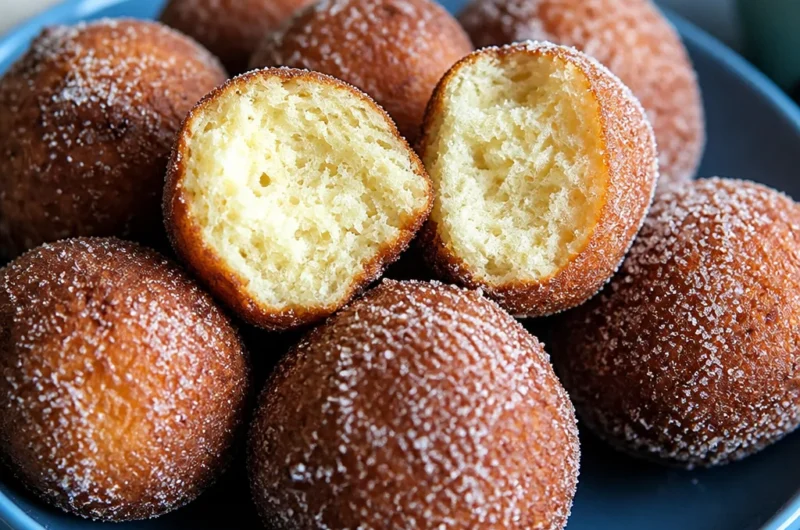
Classic German Quarkbällchen (Fried Quark Doughnut Holes) are the kind of sweet treat I make when I want something warm, fast, and guaranteed to make people hover around the kitchen. You know those days when you want a dessert, but you do not want to commit to baking a whole cake and washing a mountain of dishes? This is that fix. They come together with simple ingredients, they fry up in minutes, and they taste like a cozy little street market moment at home. Also, they are dangerously snackable, so consider yourself warned. 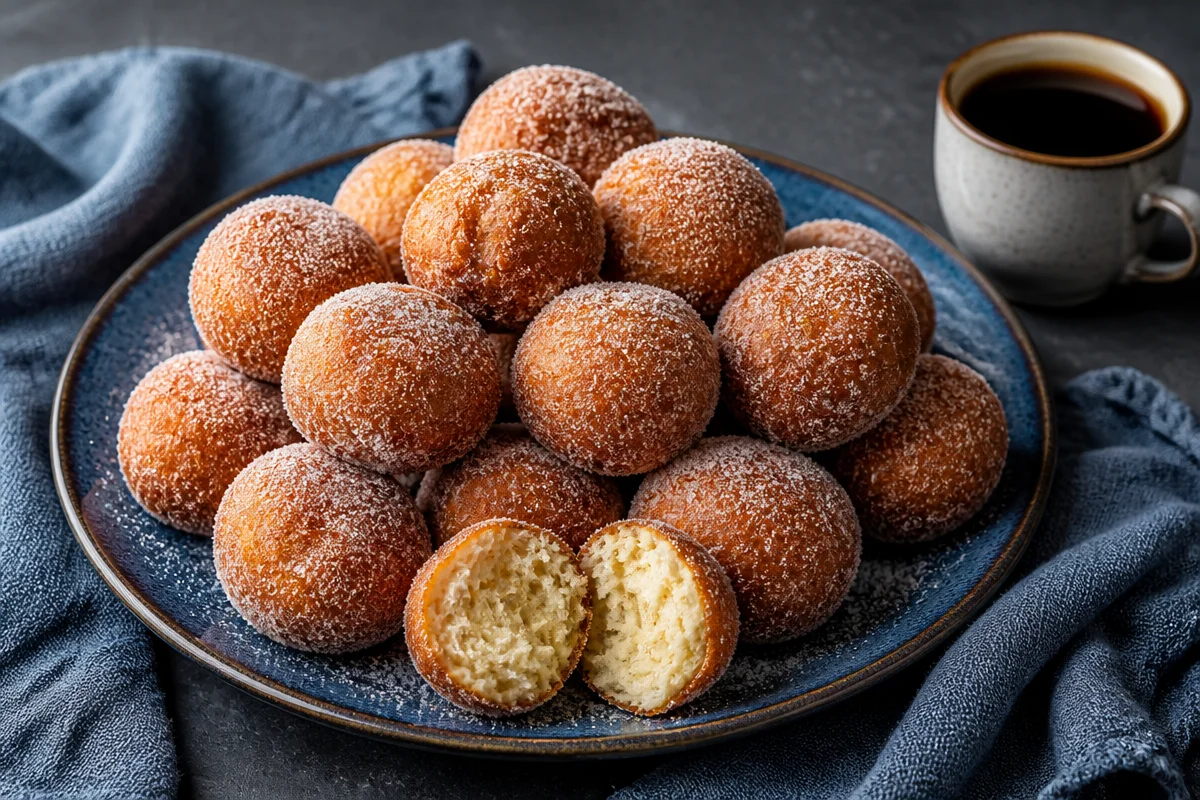
Why these German donut holes rule
I have a lot of love for all things doughnut, but these little guys have a special place in my heart. The outside gets lightly crisp, the inside stays deliciously soft, and you can finish them with a shower of sugar in about the time it takes to brew a pot of coffee.
Here is why I keep coming back to them:
- Quick comfort: no yeast, no long rise, no stress.
- Small batch friendly: you can make a bowl, fry a handful, and stop. Or not stop.
- They stay tender: thanks to quark, the inside stays fluffy instead of bready.
- Perfect for sharing: they look cute on a plate and vanish even faster.
If you are building a cozy German meal, I love pairing a sweet snack like this after something savory. For example, if you are into comfort food, take a peek at these classic German Konigsberger Klopse with caper sauce for a full on Sunday dinner vibe.
What are Quarkbllchen?
Quarkbllchen are classic German donut holes made with quark, which is a fresh dairy product that makes the dough tender and light. They are usually deep fried, then rolled in sugar while they are still warm so it sticks like a sweet little hug.
In Germany, you will see them at bakeries, festivals, and especially around carnival season, but honestly, they are an any day treat. The texture is the big reason people love them. Think: lightly crisp outside, soft inside, not greasy when done right.
My go to recipe (simple and classic)
I have tried a few versions over the years, and this is the one I keep returning to. It is straightforward and works even if you are not a confident fryer yet. This method gives you that soft center without turning them into heavy dough balls.
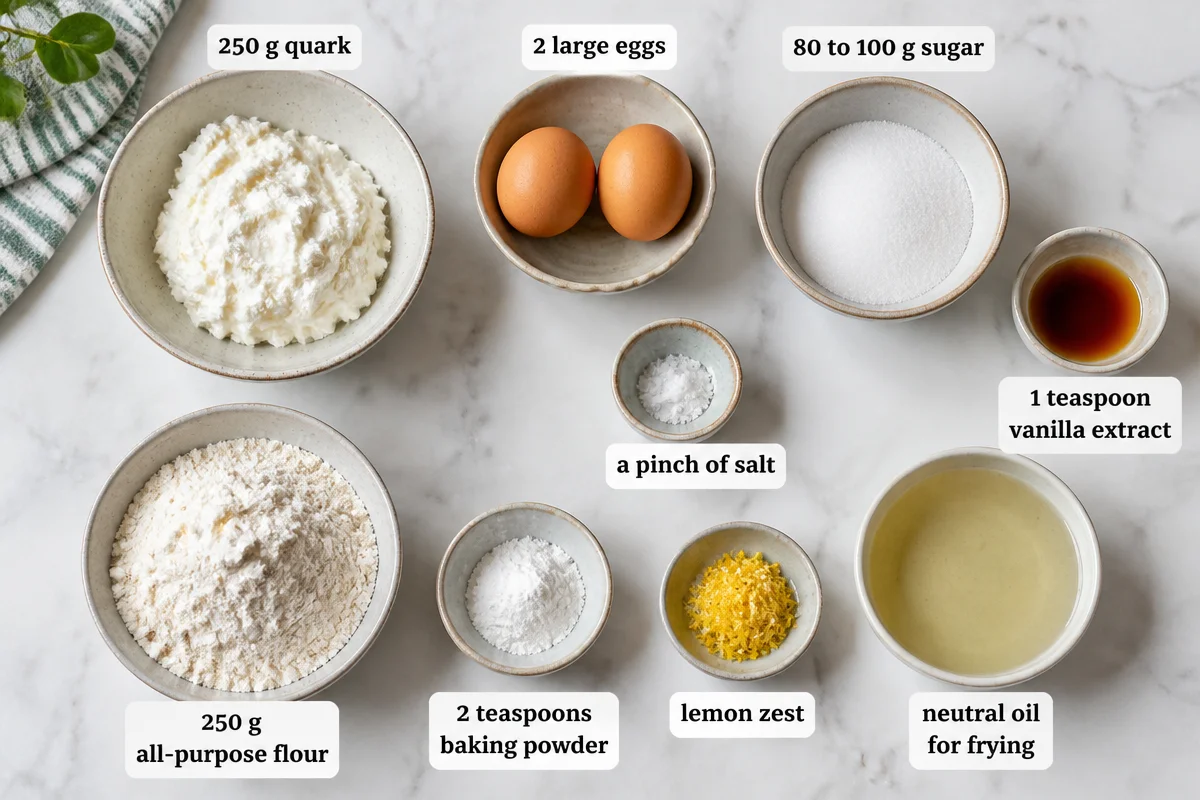
Ingredients
- 250 g quark (about 1 cup)
- 2 large eggs
- 80 to 100 g sugar (start with 80 g if you like them less sweet)
- 1 teaspoon vanilla extract or 1 packet vanilla sugar
- 1 pinch of salt
- 250 g all purpose flour (about 2 cups, spooned and leveled)
- 2 teaspoons baking powder
- Zest of 1 lemon (optional but amazing)
- Neutral oil for frying (sunflower or canola)
- To finish: granulated sugar, or cinnamon sugar
Directions (no fancy tools needed)
1) Mix the wet stuff. In a bowl, stir together quark, eggs, sugar, vanilla, salt, and lemon zest if using.
2) Add dry ingredients. Mix flour and baking powder, then stir it into the wet mixture until you have a soft, slightly sticky dough. If it feels like thick batter, that is fine. Do not overmix.
3) Heat the oil. Use a small pot or deep pan with enough oil so the balls can float. Heat to about 175 C or 350 F. If you do not have a thermometer, test with a small bit of dough. It should bubble and rise steadily, not burn fast.
4) Shape and fry. Scoop small portions using two spoons or a small cookie scoop. Gently drop them into the oil. Fry in batches so you do not crowd the pot. Turn them as they cook, about 3 to 5 minutes total, until deep golden.
5) Drain and sugar. Let them drain briefly on paper towel, then roll in sugar while still warm.
“I made these for a family brunch and people kept sneaking back for just one more. They were gone before the coffee was even done.”
If you are planning a German themed afternoon, these also go beautifully after a slice of fruit cake like this classic German Zwetschgenkuchen plum cake. Sweet on sweet is totally allowed.
What is Quark Cheese?
Quark is a fresh dairy product that sits somewhere between yogurt and soft cheese. It is creamy, mild, slightly tangy, and it makes baked goods and fried treats super tender. In Germany, you can buy it in different fat levels, but any normal quark you find will work for this recipe.
When I explain it to friends, I usually say: it is like a thicker, less salty cousin of cottage cheese, but smooth. The best part is how it behaves in dough. It adds moisture and a gentle tang, which keeps Classic German Quarkbällchen (Fried Quark Doughnut Holes) from tasting flat or dry.
One quick note: if your quark seems very wet, you can let it sit in a fine strainer for 10 minutes. You usually do not need to, but it can help the dough feel more scoopable.
How to Replace Quark
I get it. Quark can be hard to find depending on where you live. I have been there, standing in the dairy aisle like, hello, Germany? So here are my practical replacements, in order of what works best.
Best swaps:
1) Greek yogurt: Use full fat if possible. If it is very runny, strain it for 20 to 30 minutes so the dough does not get too loose.
2) Farmer cheese: Crumble it and stir well. If it is dry, add a spoonful or two of milk or yogurt to soften it.
3) Ricotta: Works, but it can be a little heavier. If your ricotta is watery, drain it first.
4) Blended cottage cheese: Blend until smooth for a texture closer to quark.
Just a heads up: the flavor will change slightly depending on what you use. But you can still get that cozy, soft inside that makes Classic German Quarkbällchen (Fried Quark Doughnut Holes) so lovable.
And if you want another classic German comfort food to make alongside your sweet treats, you might enjoy these classic German Maultaschen pasta pockets. They are the savory opposite of donut holes, and that balance is kind of perfect.
Expert Tips
I am not here to act like frying is complicated, but a few small things make a big difference. These are the tips I wish someone had handed me the first time I made Classic German Quarkbällchen (Fried Quark Doughnut Holes).
Keep the oil temperature steady. Too hot and they brown outside before cooking inside. Too cool and they soak up oil. Aim for that gentle, active bubbling.
Do not overcrowd the pot. Frying too many at once drops the temperature fast. I do small batches and it is worth it.
Use a scoop if you can. It makes the balls similar in size so they cook evenly. Two spoons also work, just keep them small.
Roll in sugar while warm. This is not optional if you want that classic finish. Warm equals sticky. Cold equals sad sugar falling off the plate.
Want a fun twist? Add a little cinnamon to the sugar. Or add orange zest to the dough for a bright note. But honestly, the classic version is hard to beat.
Common Questions
Can I make the dough ahead of time?
You can mix it and keep it in the fridge for a few hours. The dough may thicken a bit, so stir once before scooping. I would not leave it overnight if you can help it.
How do I know they are cooked inside?
They should be deep golden and feel lighter when you lift one out. If you are unsure, open one. The inside should look set and fluffy, not wet.
Why did mine turn out greasy?
Usually the oil was not hot enough, or the pot was overcrowded. Keep the temperature steady and fry in smaller batches.
Can I bake them instead of frying?
You can, but they will not taste the same. Frying gives that classic crust. If you bake, think of them as soft quark puffs rather than donut holes.
How do I store leftovers?
They are best the same day. If you have extras, store them in a container at room temp for a day. Rewarm for a few minutes in the oven to bring back some softness.
A sweet little kitchen win
If you have been craving a treat that feels special without being a big project, make a batch of Classic German Quarkbällchen (Fried Quark Doughnut Holes) and enjoy them warm with coffee or tea. Once you get the oil temperature under control, the rest is basically stirring, scooping, and smiling. If you want to compare versions, I also like reading recipes like Easy German Mini Donuts (Quarkbällchen) – dirndl kitchen and Quarkbällchen – Crispy German Donut Balls Recipe – My Dinner because everyone has their own little tricks. Try these once, and I really think they will become your go to for last minute guests or cozy weekends at home.
Classic German Quarkbällchen
Ingredients
Method
- In a bowl, stir together quark, eggs, sugar, vanilla, salt, and lemon zest if using.
- Mix flour and baking powder, then stir it into the wet mixture until you have a soft, slightly sticky dough. If it feels like thick batter, that is fine. Do not overmix.
- Use a small pot or deep pan with enough oil so the balls can float. Heat to about 175°C (350°F).
- Scoop small portions using two spoons or a small cookie scoop and gently drop them into the oil.
- Fry in batches so you do not crowd the pot. Turn them as they cook, about 3 to 5 minutes total, until deep golden.
- Let them drain briefly on paper towel, then roll in sugar while still warm.