
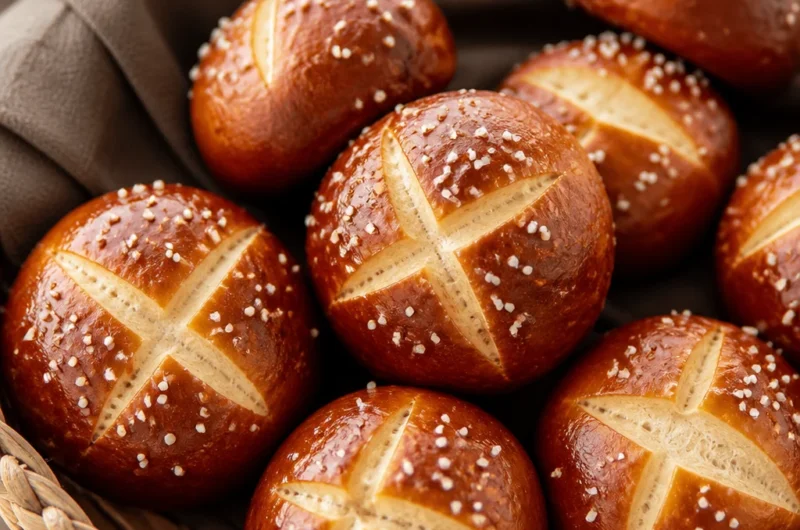
Classic German Laugenbrötchen (Pretzel Rolls) are my go to solution when I want something cozy and bakery worthy at home, but I do not feel like leaving the house. You know that moment when you are craving a warm, chewy roll for breakfast or soup, and plain dinner rolls just will not do? This is exactly that fix. They smell like a pretzel shop, taste like a soft pretzel, and still slice open like a bun for sandwiches. The best part is they look impressive even though the process is totally doable in a normal kitchen. 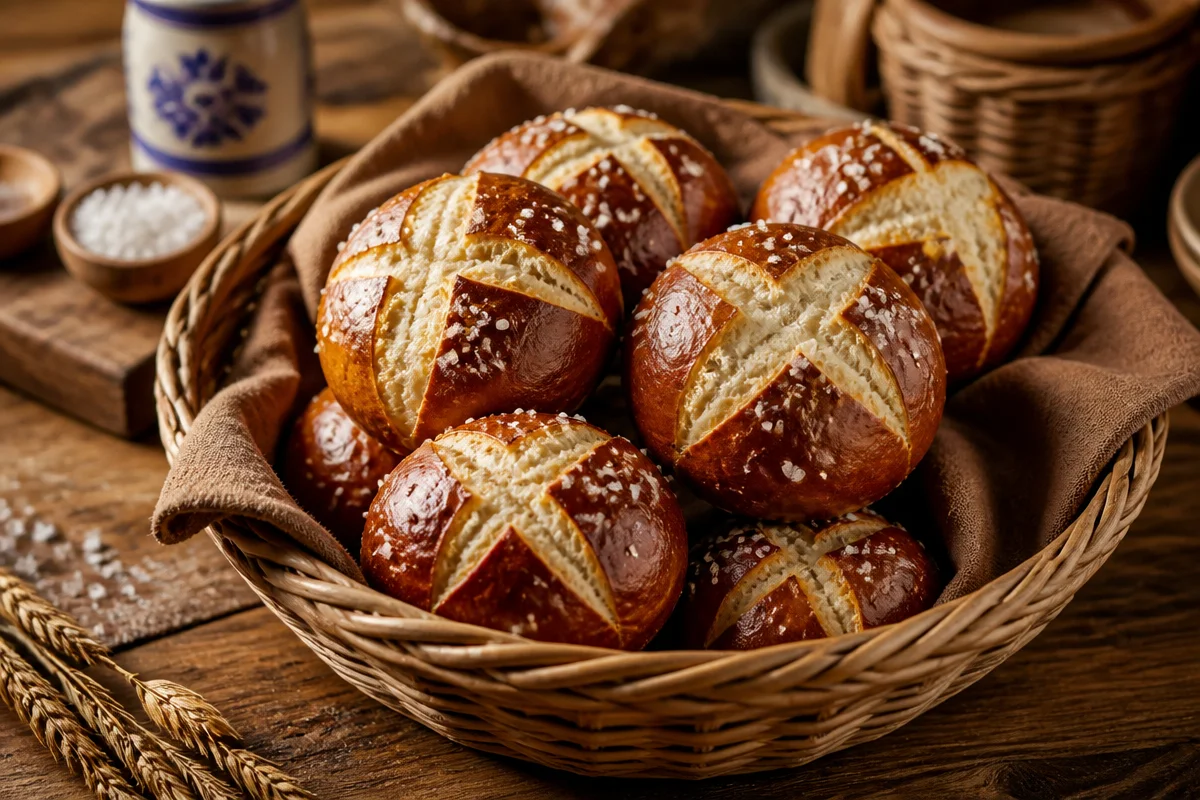
How to make pretzel buns
The “pretzel” magic comes from a quick dip in a baking soda bath before baking. That is what gives you the deep brown crust and that classic pretzel flavor. If you have ever made cinnamon rolls or basic bread dough, you can absolutely handle this.
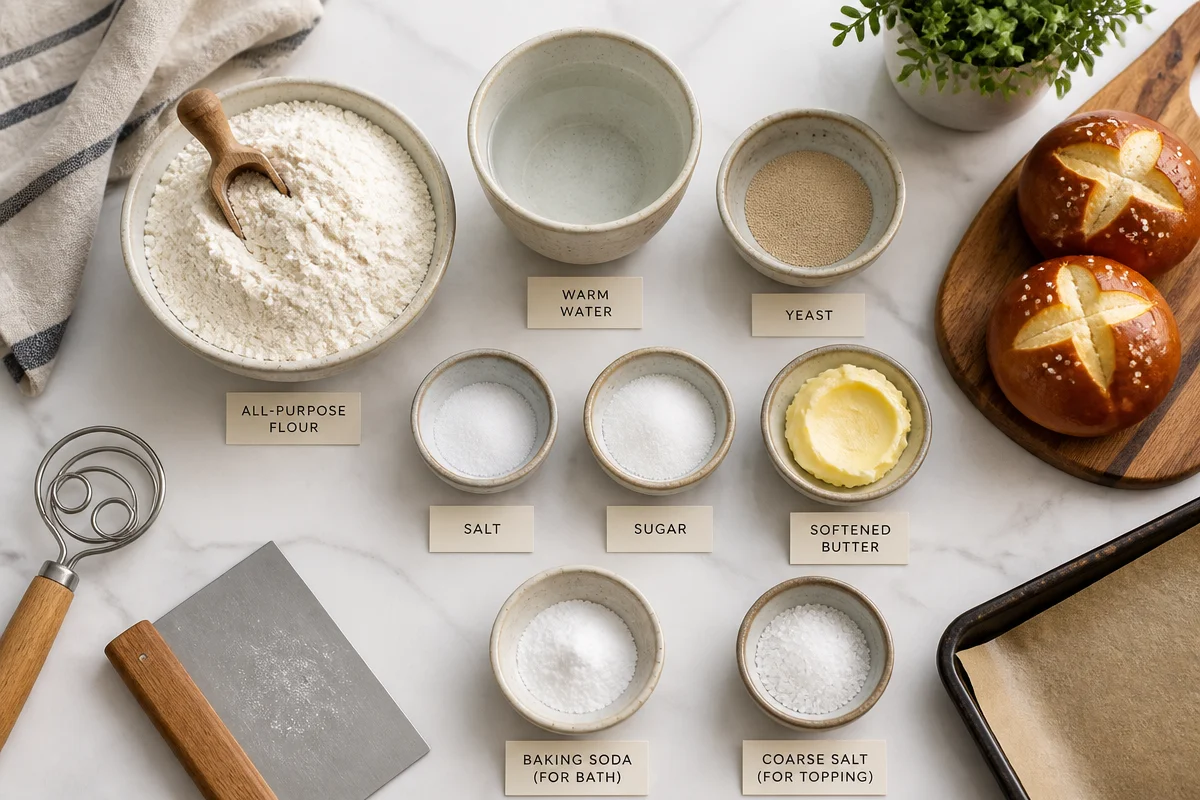
Ingredients and what you will need
- All purpose flour (or bread flour if you have it)
- Warm water (not hot, think baby bath warm)
- Yeast (active dry or instant)
- Salt
- A little sugar (helps the yeast get going)
- Butter (softens the crumb)
- Baking soda for the bath
- Coarse salt for topping (pretzel salt is great, flaky salt works too)
I usually mix the dough in a bowl with a spoon at first, then switch to my hands on the counter. Knead until it looks smooth and feels stretchy, around 8 to 10 minutes. If it is sticky, add flour one spoon at a time, but do not bury it. A slightly tacky dough is your friend here because it bakes up softer.
Let it rise in a lightly greased bowl until doubled. In a warm kitchen this can take about an hour. If your house is chilly, it can take longer, and that is fine. Bread does not care about your schedule. It just wants time.
Shaping, dipping, and baking
Once the dough has risen, divide it into 8 pieces for medium rolls or 10 for slightly smaller ones. Shape each into a smooth ball by tucking the edges underneath and rolling it gently on the counter. Place them on a parchment lined baking sheet, cover, and let them puff again for about 20 to 30 minutes.
Now for the signature step. Bring a wide pot of water to a gentle boil and add baking soda carefully. It will foam up a little, so use a bigger pot than you think you need. Dip each roll for about 20 to 30 seconds per side. Do not overthink it, just keep it moving. Place back on the baking sheet, score the top with a sharp knife, sprinkle coarse salt, and bake until deeply browned.
If you want a classic German dinner vibe, these pretzel rolls are so good next to something comforting like Konigsberger Klopse in caper sauce. Soft roll plus creamy sauce is a very happy situation.
How to store pretzel rolls
Let us be real, these are best the day you bake them. That said, you can still keep them tasty for a couple days with the right storage.
For short term storage, I keep them in a paper bag for a few hours if I want the crust to stay a little crisp. Overnight, I switch to a sealed container or zip top bag so they do not dry out. The crust will soften, but the inside stays fluffy.
To refresh, pop them in a 350 F oven for about 6 to 8 minutes. If they feel a little dry, lightly mist the outside with water first. It sounds fussy, but it takes two seconds and brings back that pretzel shop vibe.
Freezing tips that actually work
Freezing is the move if you want “future you” to be thrilled. Cool the rolls fully, then freeze in a bag with as much air pressed out as possible. When you want one, let it thaw on the counter and warm it in the oven. I do not love microwaving them because it makes the crust kind of rubbery.
One more little tip: slice them before freezing if you know you will use them for sandwiches. It makes life easier, especially on busy mornings.
“I tried these for Sunday brunch and my family thought I bought them from a bakery. The crust was perfect and the inside stayed so soft even the next day.”
Homemade Soft German Pretzel Buns (Laugenbrtchen)
This section is for the soft roll lovers, because that is honestly my whole motivation. When I say soft, I mean that satisfying, fluffy bite that still has a little chew. The secret is not fancy ingredients. It is a few small choices that add up.
First, do not add too much flour. It is tempting when the dough sticks, but a slightly tacky dough bakes up more tender. Second, do not skip the second rise. Those 20 to 30 minutes after shaping give you that light interior. Third, bake until rich brown, not pale. That color equals flavor.
I also like brushing the rolls with a tiny bit of melted butter right when they come out of the oven. This is optional, not traditional for everyone, but it makes the crust just a little less sharp and keeps the inside feeling extra cozy.
When I am making a full German spread at home, I will often pair these with something hearty like classic German Maultaschen. It is comfort food stacked on comfort food, and nobody complains.
Laugenbroetchen: A pretzel in roll form
So what is the deal with the name? “Lauge” refers to the alkaline bath used before baking. At home, most of us use baking soda, which is safer and easier than food grade lye. In many bakeries, they use lye for an even deeper color and that unmistakable pretzel snap, but baking soda still gives you a really good homemade version.
These rolls are basically the practical cousin of a big pretzel. You get the flavor and that shiny brown crust, but they are easier to slice and fill. I love them for:
Breakfast with butter and jam, or cream cheese and smoked salmon
Lunch as a turkey and mustard sandwich
Dinner alongside soup, stew, or anything saucy
And if you are into sweet German baking too, keep this in mind: a pretzel roll breakfast followed by a slice of Zwetschgenkuchen plum cake later is a pretty excellent day.
;
Making Soft Pretzels as Rolls
If you have only made soft pretzels in the twisty shape, turning them into rolls is honestly easier. No fancy looping, no worrying that one side is thicker than the other. You just shape balls, dip, score, and bake.
A few practical tips from my kitchen to yours:
Keep the water at a gentle boil, not a wild raging one, so the rolls do not get knocked around.
Use a sharp knife for scoring. A dull one drags and makes the tops messy.
Do not crowd the pot during the bath. Dip one or two at a time so you can flip them calmly.
Salt right after dipping so it sticks well.
And yes, you can absolutely use these for burgers. It feels a little extra in the best way.
Common Questions
1) Can I make the dough ahead of time?
Yes. Let it rise once, then cover and refrigerate overnight. The next day, let it sit out for 30 to 45 minutes, shape, rise, dip, and bake.
2) Why did my rolls turn bitter?
Usually it is too much baking soda in the bath or dipping too long. Stick to a reasonable amount of baking soda and keep the dip short.
3) Do I have to use coarse salt?
It is best because it gives that classic pretzel bite. If you only have fine salt, use less or it will taste too salty.
4) How do I keep them soft?
Do not over flour the dough, do not over bake, and store them sealed once fully cooled. Rewarm in the oven to bring them back to life.
5) Can I make them without yeast?
Not really in the same way. Yeast is what gives you that bread like texture. Without it, you would be making more of a quick biscuit style roll.
A warm batch is always worth it
Once you bake Classic German Laugenbrötchen (Pretzel Rolls) at home, it is hard to go back to regular buns for cozy meals. You get that deep pretzel flavor, a soft inside, and a roll that works for breakfast, sandwiches, or dinner sides. If you want another solid reference point, I also like reading Authentic German Pretzel Buns (Laugenbrötchen) – dirndl kitchen and comparing notes with Pretzel Rolls – Host The Toast. Go make a batch, enjoy one fresh from the oven, and save a couple for tomorrow so you can feel like a genius at breakfast.
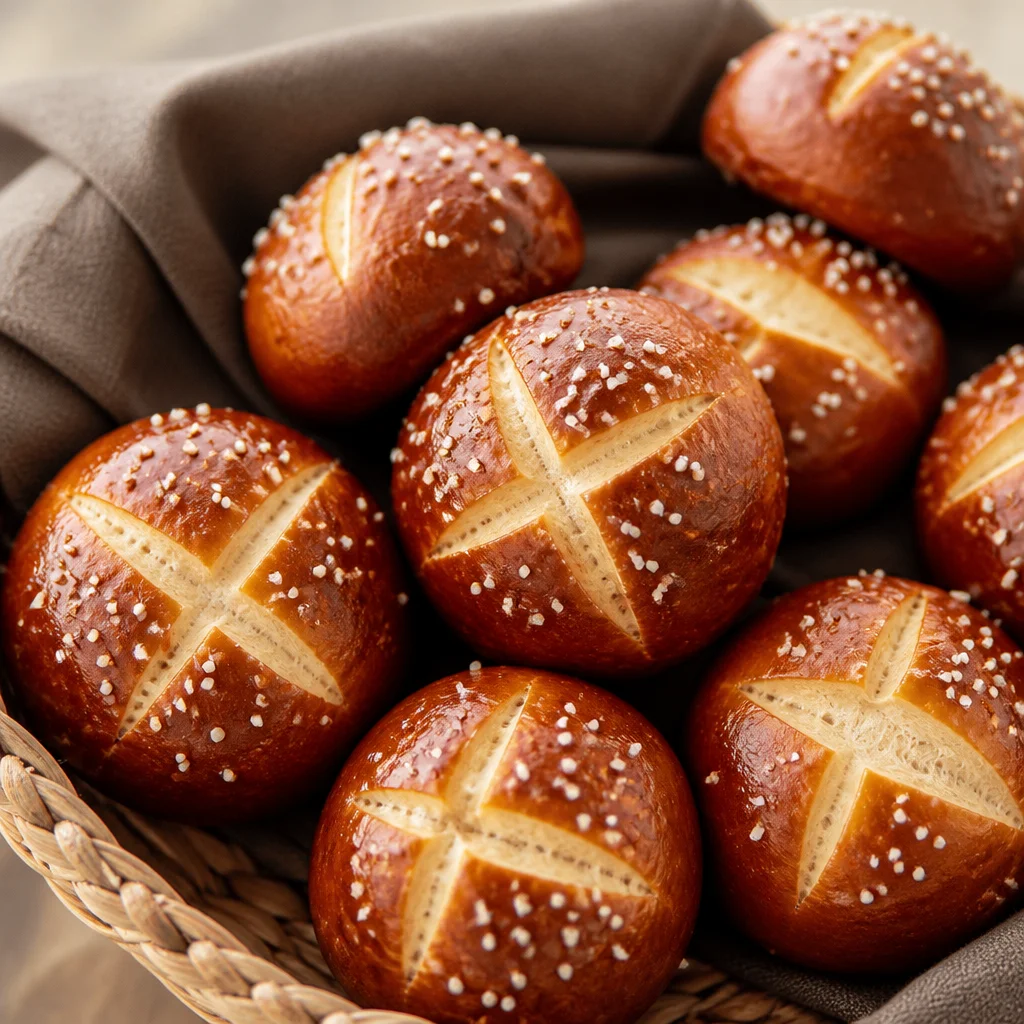
Classic German Laugenbrötchen
Ingredients
Method
- In a bowl, mix flour, sugar, salt, and yeast together.
- Warm the water and add it to the dry ingredients.
- Add soft butter and mix initially with a spoon, then knead with hands until smooth and stretchy (about 8-10 minutes).
- Let the dough rise in a greased bowl until doubled, about 1 hour in a warm kitchen.
- Once risen, divide the dough into 8 pieces for medium rolls (or 10 for smaller ones).
- Shape each piece into a smooth ball and place on a parchment-lined baking sheet.
- Cover and let them puff for about 20-30 minutes.
- In a large pot, bring water to a gentle boil and carefully add baking soda.
- Dip each roll for about 20-30 seconds per side, then place back on the sheet.
- Score the tops with a sharp knife and sprinkle with coarse salt.
- Bake in a preheated oven until deeply browned, about 20 minutes.